
Food and identity have always gone hand in hand.
Food and community have always gone hand in hand.
Food and culture have always gone hand in hand.
I could never write anything as eloquent and accurate in capturing these ideas as Ella and Kayla said at our dinner a few weeks ago. I can only attempt to capture the story of intersectionality and community that the two students told to me, and experienced with me.
I met Ella and Kayla at my Food and Justice in Israel-Palestine course last quarter. I approached them to see if they would be willing to make a dish from their culture and be interviewed about the significance of the dish over an evening spent together. They were both excited by the idea, and we set a date a few weeks out. We met in the early evening at Ella’s beautiful home, where she promptly greeted us with tea.
Only after planning the event did I find out that Kayla was not Jewish, and that I had wrongly assumed her to be, after mistakenly believing I must have prefaced the inquiry with “Jewish dish”, but realized I never did. I shifted my article to be more open-ended, not strictly focused on Jewish food, and trusted that the story would come to us as we spoke about these important dishes. We were right to trust this, as the evening revealed a beautiful story of shared identity and histories.
When asked about how they identify, Kayla described herself as Lebanese-Armenian. “I was raised in a very Arab culture. I was raised on the premise of the traditions taught to my family in Lebanon, they really carried them over,” Kayla shared. “We grew up speaking Armenian and Arabic.”
Ella identifies as “very Ashkenazi” and Israeli, but noted that this identity has not always felt comfortable. “I’ve always had a hard time with my national identity… I am not Israeli enough in Israel, and I am not American enough here—and I don’t really want to be American enough.” When I asked Ella if she identified as American, she responded: “I have an American passport”.
While Ella may not subscribe to an American identity, her experience is one of a Jew (more specifically, an Israeli) living in the United States. Ella and Kayla were both raised in the US; Ella spent the first four years of her life in Israel, and Kayla has never been to Lebanon, where her family immigrated from. Because they are both Middle Eastern and grew up in the United States, Ella and Kayla found that they shared many aspects of their culture, such as food traditions and ingredients.
Kayla proclaimed herself proudly as a chef and explained that she grew up integrating Jewish food into her diet.“All of my best friends and people closest to me growing up were all Jewish. I grew up going to Temple with them, attending every holiday with them, reciting prayer with them, and I was really really integrated into…American Jewish culture growing up. I spent years celebrating Hanukkah. We would light the menorah and say the prayer every single night…I grew up integrating Jewish food into my… diet.”
Ella also shared how she found closeness with the American Arab community and how stark of a contrast that felt to her compared to her time in Israel.
“I grew up knowing that I’ll probably never be able to step foot in Lebanon, legally or safely. And I heard of it being such a beautiful place, and … I really wish one day this world will be less fucked up and I will be able to come as a tourist and see it’s beauty. I know how lovely its people are and its food…I grew up seeing Lebanon’s borders, but never [went] into it…Growing up here in the states… I felt a lot more connected to Arab Americans… than I did with anyone else. It felt like we had a lot more in common. We both understood what bomb shelters are and had overlapping food and family ideas. And I knew that America is one of my only ways to experience these people because by the current state of the world, I wouldn’t be able to go visit their homes [in the Middle East] or them to mine…I was always aware of how lucky I am.”
Due to the closeness of the two communities, many Arab American and Jewish American people share cooking practices, such as filling vegetables, ingredients, such as cardamom, and other universal cooking practices, including cooking with your family in the kitchen and learning recipes from your elders. Kayla stated that the fact that “[baklava] can be done in so many different ways—the diversity of baklava across different cultures—is probably what makes it the most important to me.”
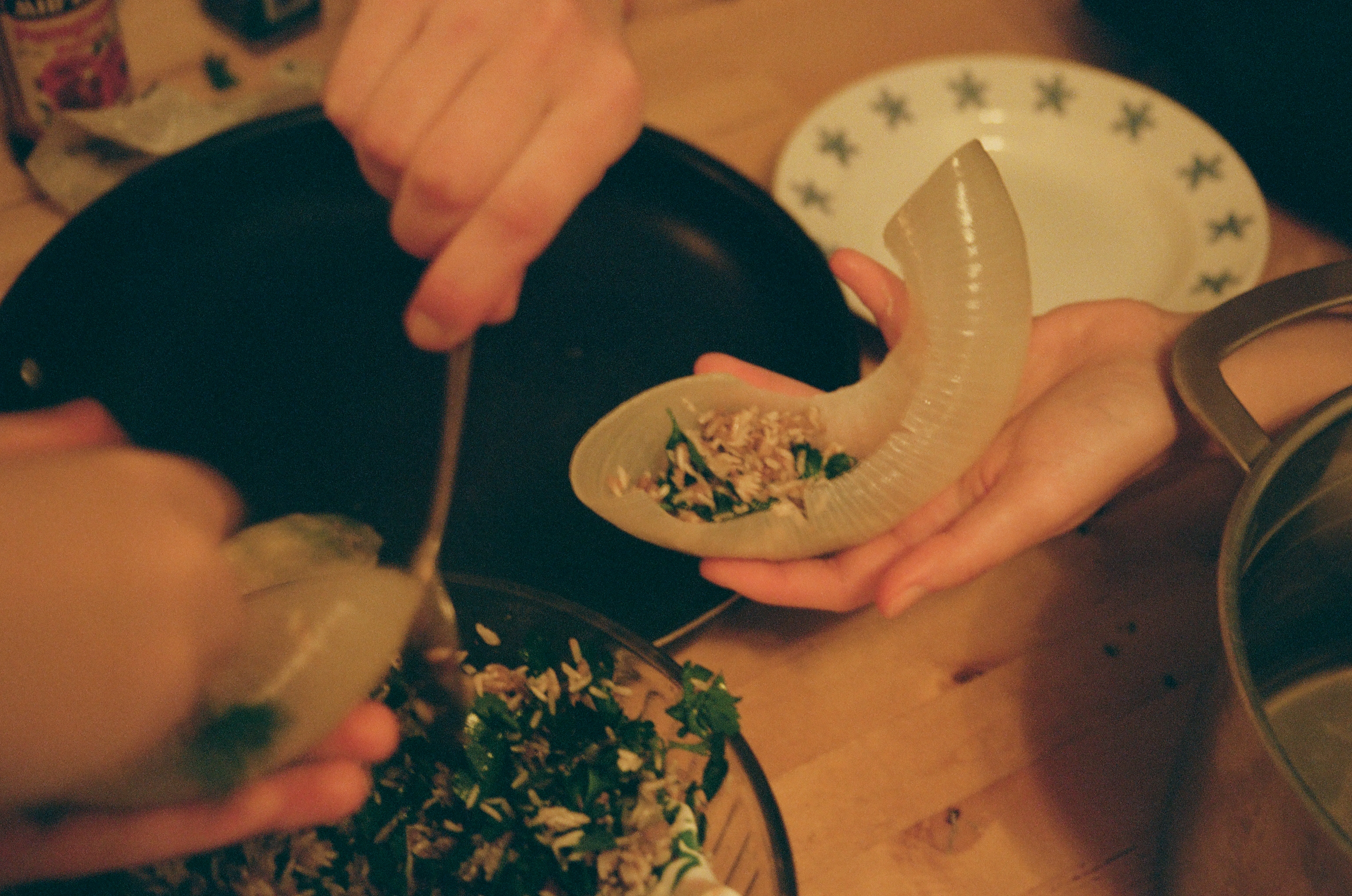
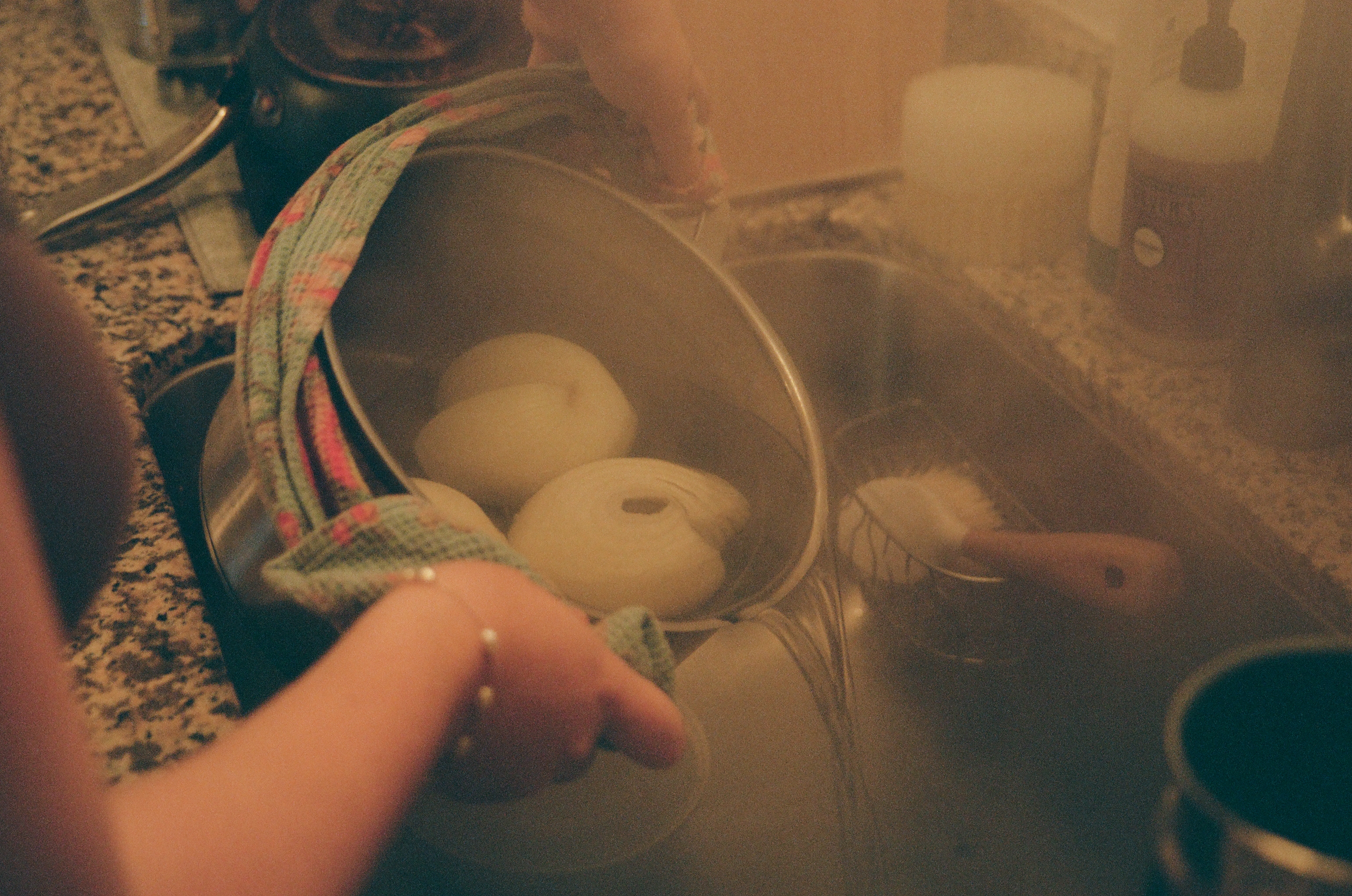
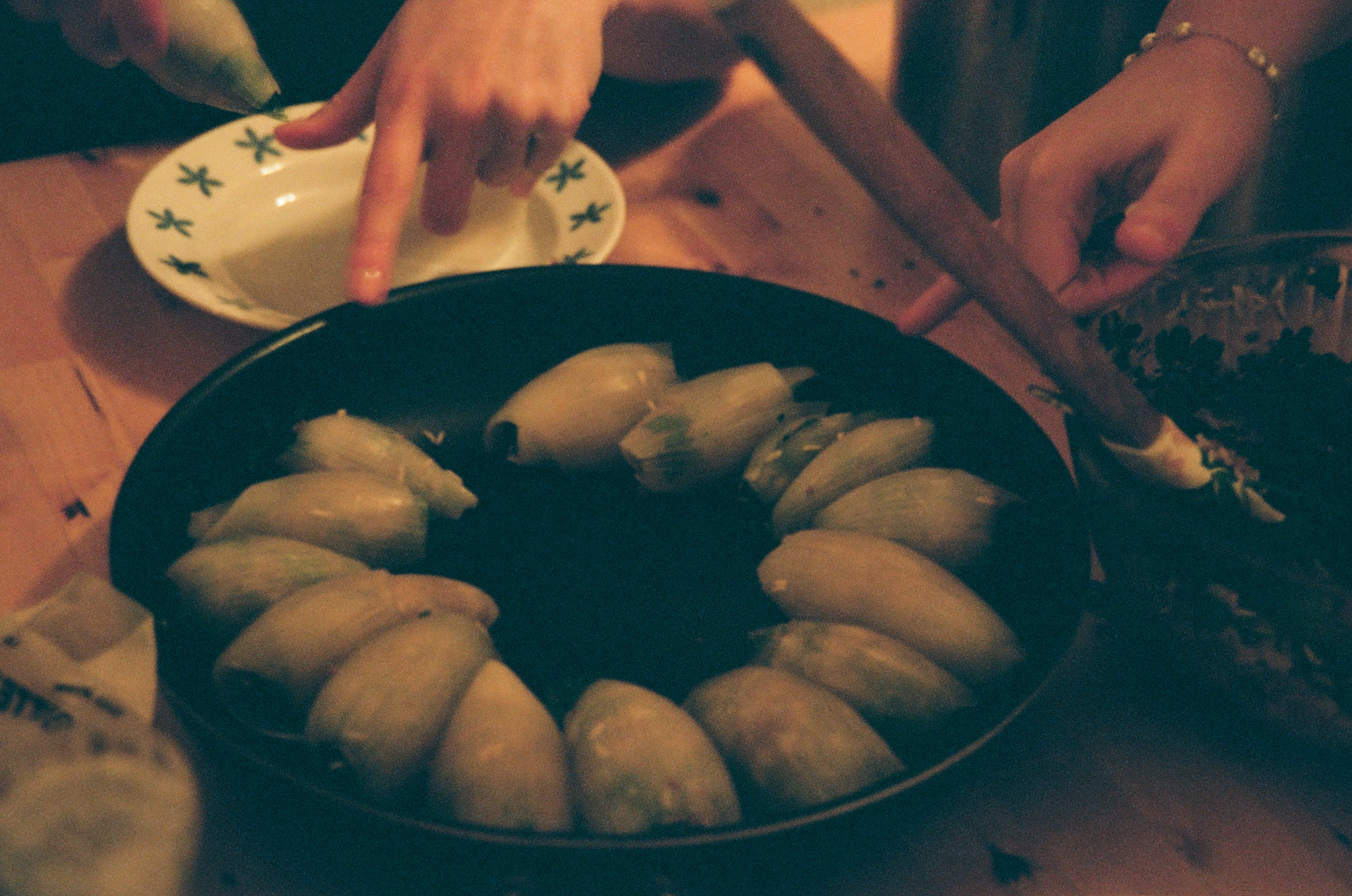
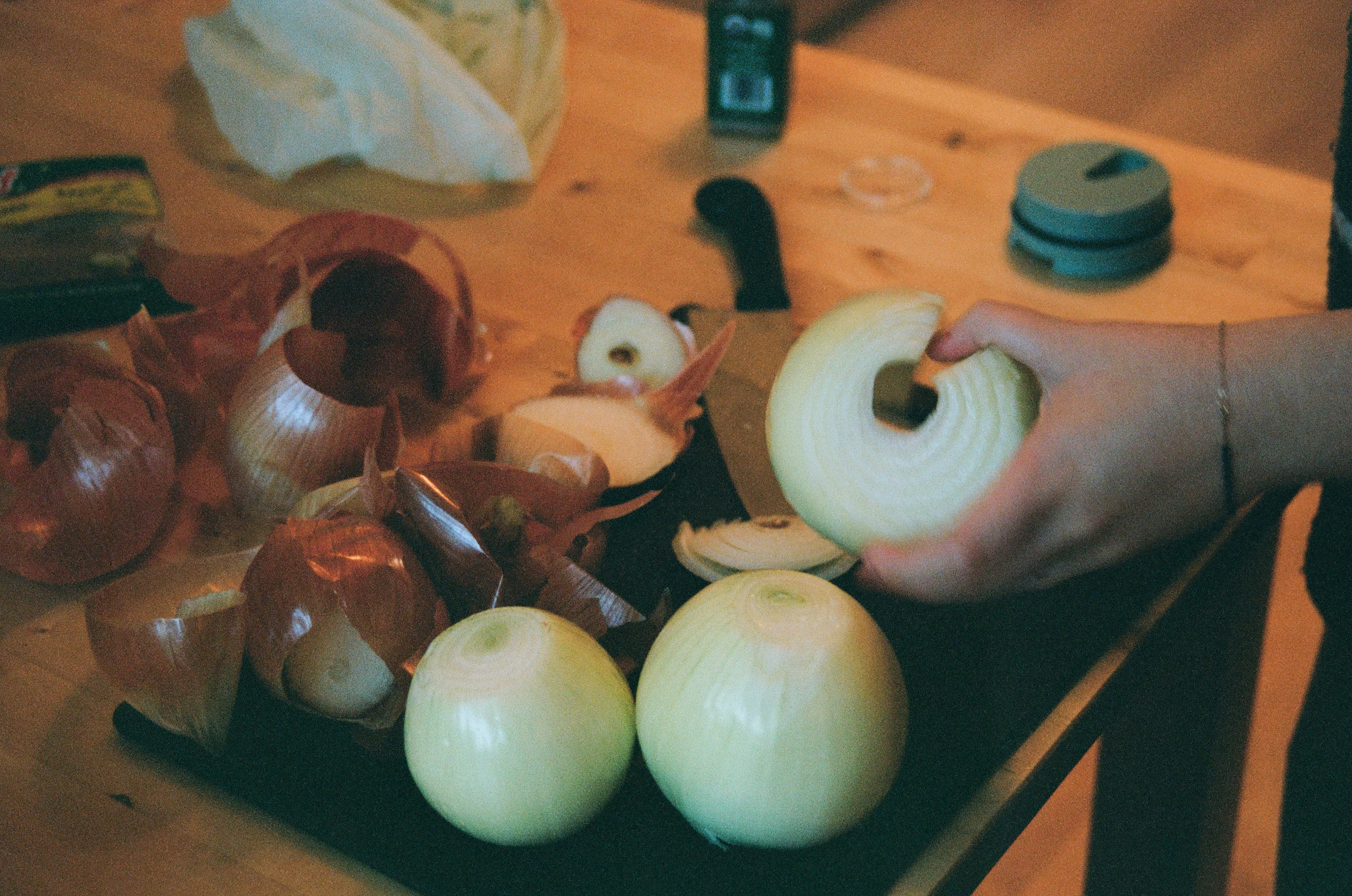
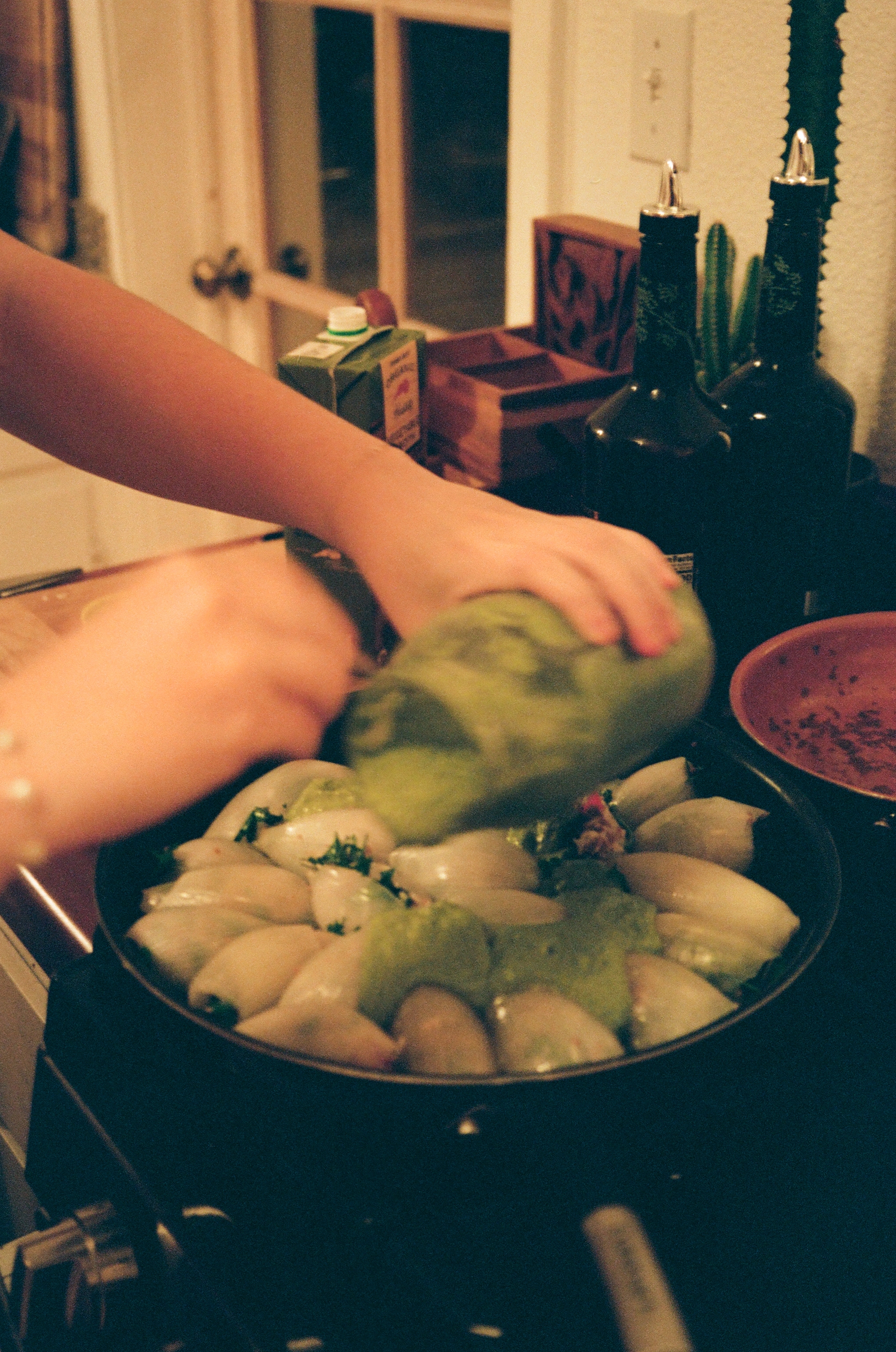
When I asked about what specific influences played a role in their decision to make the dish they chose tonight, Ella explained, “I grew up eating stuffed cabbage, which is a very Jewish-Polish situation. And I love just like anything stuffed, like filled, situation. There’s grape leaves and onions, and I know different variations and I wanted to make the onion version of it, so I did that.” She also described influences like family friends, and her vegetarian diet. “We will be combining it with a sauce. [A family friend] makes this really good dish with this sauce, but he always makes it with meat and I don’t really eat meat, and I’m really pissed at him and I just eat the sauce. So I decided to take matters into my own hands… I’m just combining different influences that I have in my life…I learned stuffed cabbage from my mom. The sauce I learned from a good family friend.” The dish is a beautiful collage of Ella’s history, culture, family, friends, and personal interests.
Kalya answered, “The two staple Middle Eastern foods are hummus and baklava… every culture claims both of them, and no culture owns any of them, which is what I think makes baklava so interesting to make. Every culture has their own way of making it however, and I have been playing with it for probably the last ten years. I am a big baker and it’s a super delicate thing to bake, and it’s something that I feel like I can put a lot of effort into. And I love doing that when I bake. Really just finding what I can do to make something beautiful and delicate with my hands.”
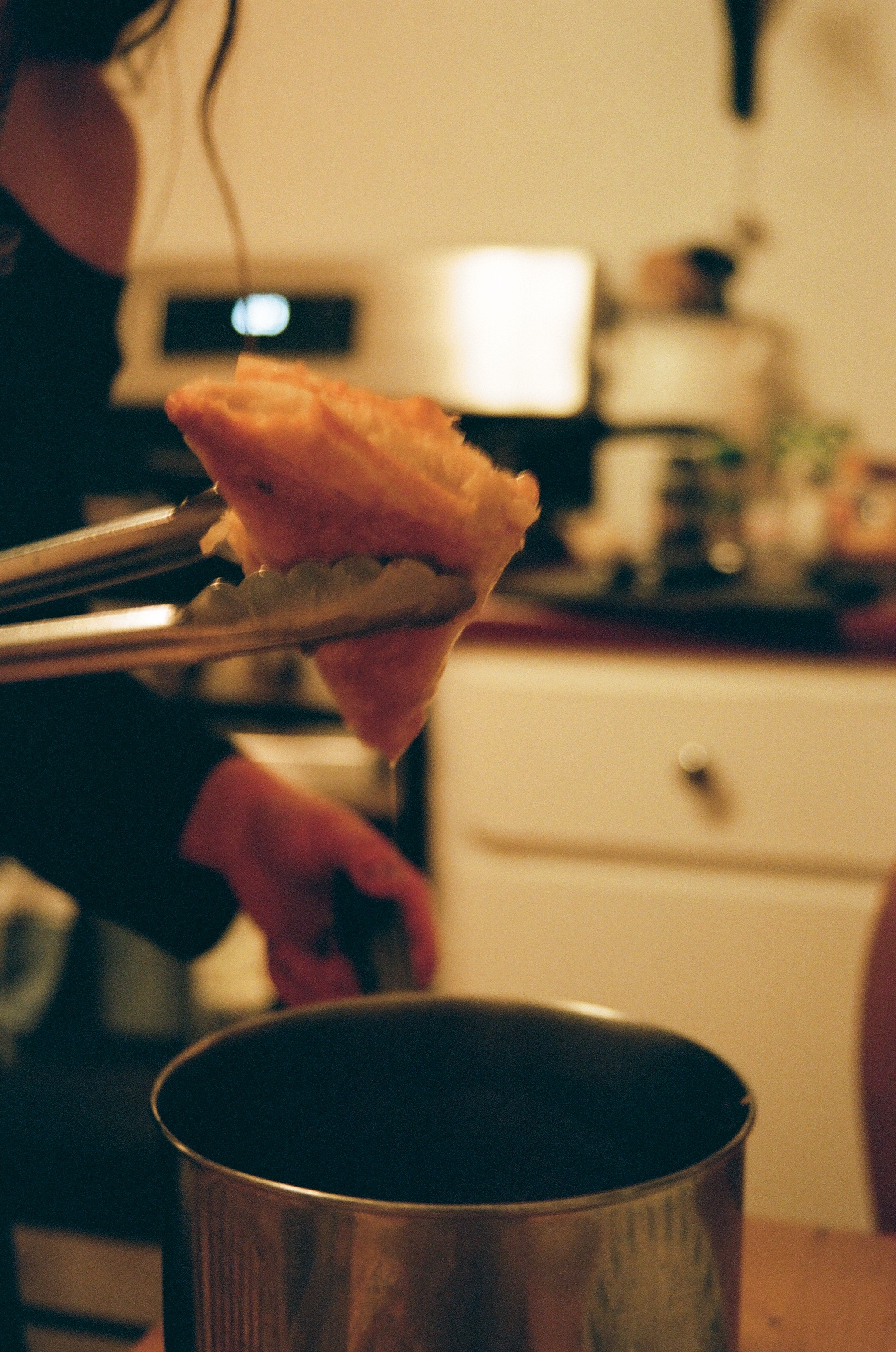
As Kayla prepared the baklava, she spoke about the filo, the layered, delicate, frustrating dough used to make baklava. “She’s killing me today! Worse than I’ve ever had filo treat me before.”
While staying frustrated at the dough she continued to work with, Kayla explained the significance of the specific spices she used, which were unique to the Lebanese way of making baklava. “Cardamom is a beautiful spice, and it represents poverty in a way that most spices don’t. It’s a very, very cheap spice, so they use it in bulk, especially in Lebanon. In comparison to cinnamon, per se… in contrast to Tunisia, in Tunisia, they use lots of cinnamon in their baklava, but somebody who’s Lebanese would probably think it was weird to use cinnamon. But I personally prefer cardamom. However, cinnamon baklava is probably better known.”
Family connection played a role in Kalya’s choice to make baklava, just as Ella’s family played a role in her choice to make stuffed onions. “I have it at all the family functions and stuff. And the classic, making it with my grandmother. Making it with my dad.”
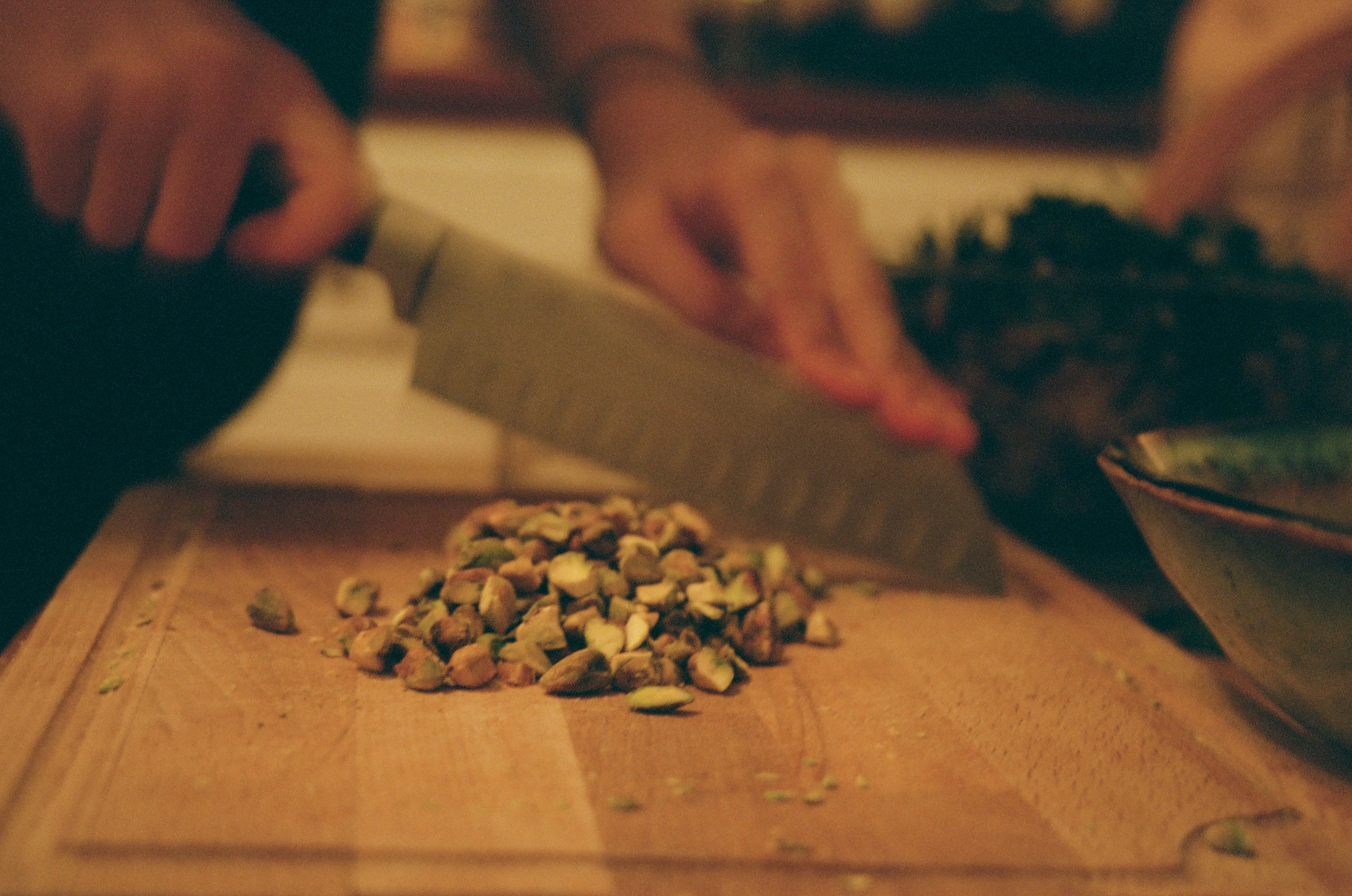
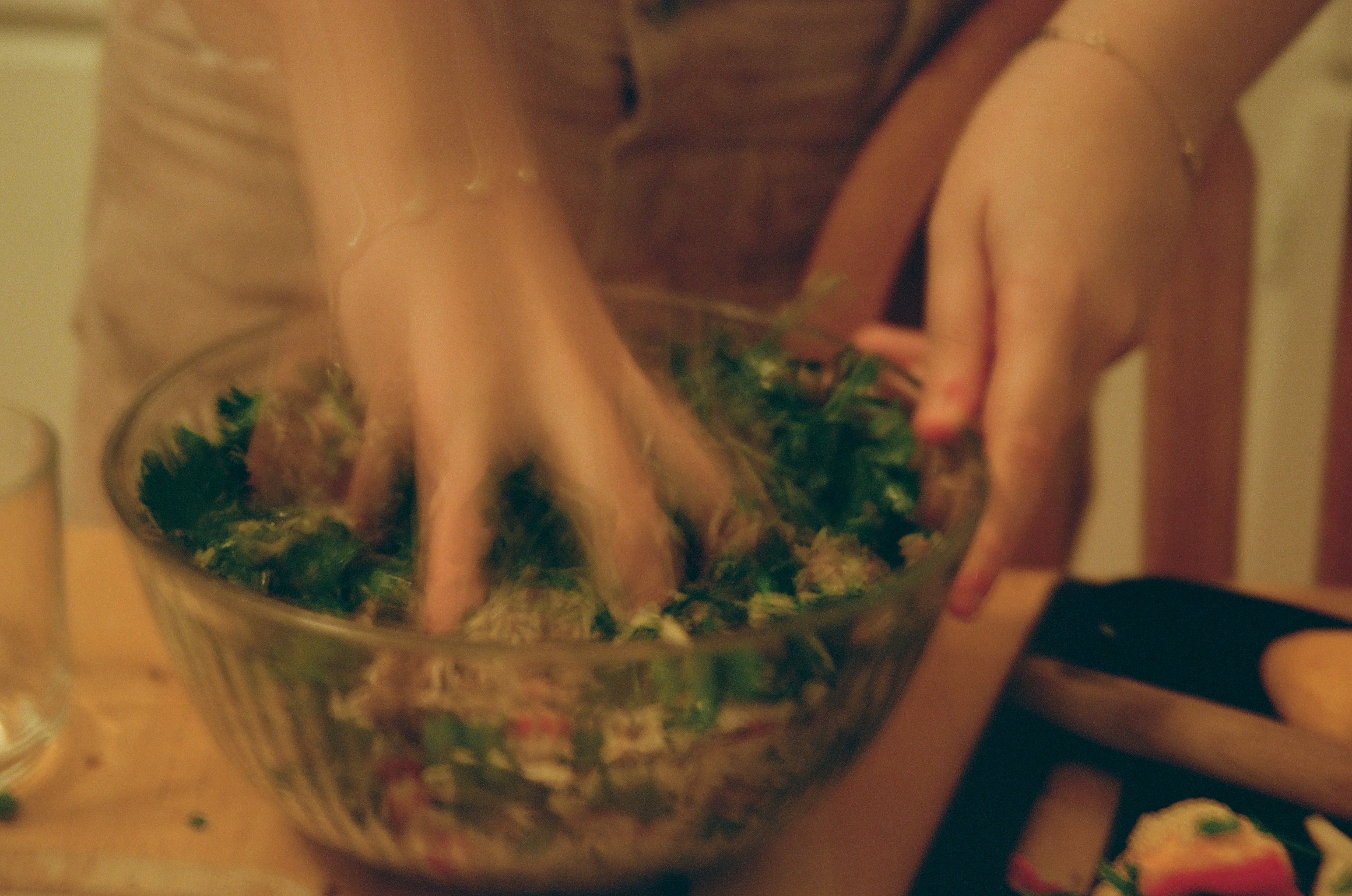
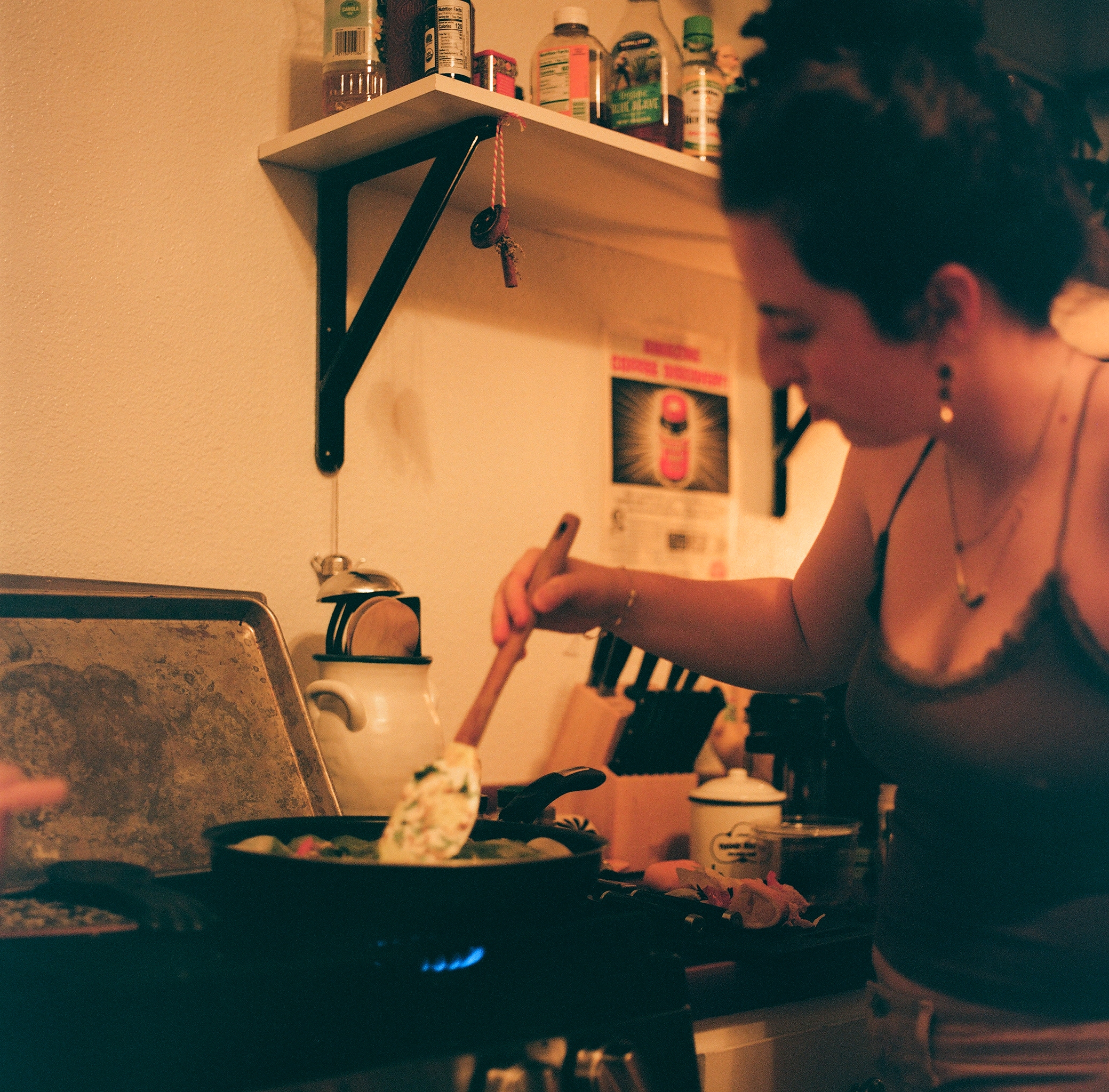
Ella was delicately stuffing onions and Kayla, loudly chopping pistachios. I asked, “Does the food make you feel connected to yourself? Does the food make you feel like you?” In unison, they replied, “Yes.” while not looking up from their preparation. The simplicity of this answer mirrors the simplicity in which it takes to answer the more general question: is your identity tied to food? To which, the answer is always yes.
The aspect of food and connection that stood out to me the most in our conversation was community. The most value to be found in food and cooking was the community practices that surround it. Ella shared, “Eating food alone is so depressing. I love food, and when I’ve been really depressed, I’ve been like, I’ll just go eat food, and that’ll fix me. But like a big part of eating food is eating it with people you love and people who care about the food… you can enjoy food by yourself in certain moments, but I couldn’t imagine … cooking when I’m around other people … and not offering to share it. That feels like my parents would kill me for that.” Kayla shared this sentiment entirely: “If I’m making stuff for myself, I make it for everybody.”
While still preparing, one would fret with fear and insecurity about the dish not being perfect enough, and the other would jump in to provide reassurance. They took turns telling each other the things that they needed to hear from themselves.
Additionally, it’s not just food that makes it special; it’s food that’s prepared with love and tied to identity. Kayla said, “I love making something with my hands. I like putting work and effort into it and knowing that people have put work and effort into this dish and spent hundreds and hundreds of hours of prep on this dish before me. It feels for me, giving to people, is worth the most when you put your time and love and effort into it, and it feels like quite literally I do put love and effort into every piece of baklava that I make.”

This love in which this food is prepared with, and shared with, is what makes food so special and emotional. Kayla: “This was our first time ever hanging out outside of class, and outside of honestly a two-minute conversation, and I immediately felt very safe and comfortable just because we’re in a kitchen environment doing something very vulnerable with each other—which is sharing really important recipes and eating together.”
“And recipe that ties you to yourself and your history,” I interrupt.
Kayla nods. “…A uniquely shared history…”
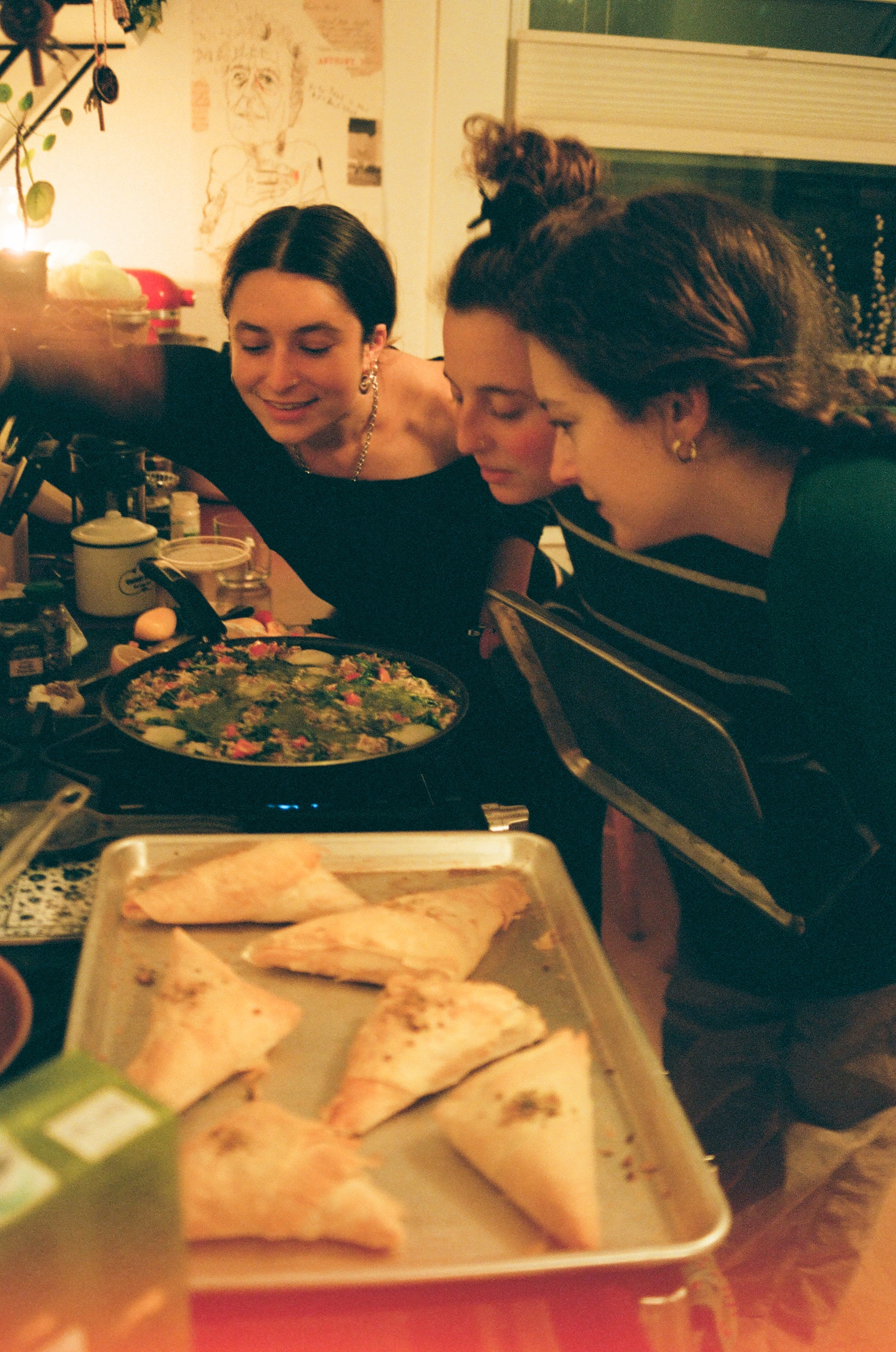
Preparing, sharing, and eating food together connects us to ourselves and, therefore, each other because of shared history and shared food. Food certainly holds much more significance than a thing we consume to sustain ourselves, it gives us life not only in a physical sense but in a personal, communal, cultural, and spiritual sense. A connection around food could and does happen with any groups of peoples or individuals of many backgrounds. However, part of what made this dinner so special and unique is the intertwinment of Jewish people and culture and Arab people and culture, specifically here to the connections we form in the United States. This dinner—shared between a Lebanese Armenian, Jewish American, and an Israeli—is just one of thousands of years worth of stories about the shared food and culture our people have.
Food and identity have always gone hand in hand.
Food and community have always gone hand in hand.
Food and culture have always gone hand in hand.
And tonight, our Jewish-American, Israeli, and Lebanese-Armenian hands hold each other’s around the dinner table.










Leave a Reply